
Madagascar
Madagascar is currently facing a complex humanitarian situation following the successive impacts of two severe tropical systems — Cyclone Fytia on 31 January and Intense Tropical Cyclone Gezani on 10 February. These events caused widespread destruction across the north, west and east of the country, damaging infrastructure, livelihoods, agriculture and essential services. More than 681,000 people have been affected, including over 632,400 in urgent need of humanitarian assistance. The cyclones struck several of the same regions, including Alaotra Mangoro, Analamanga, Atsinanana and Itasy, with additional impacts reported in Betsiboka, Melaky, Sofia and Vakinankaratra. A national state of disaster was declared on 12 February following Cyclone Gezani.
The impacts of these events are occurring in a context of pre-existing structural vulnerabilities that affect access to health services across Madagascar. More than 60% of the population lives more than 5 km from the nearest health centre, with access further constrained by geographic barriers, weak transport networks and seasonal inaccessibility. Damage to infrastructure, flooding, and displacement following the cyclones have further disrupted essential services and limited access to care.
The health sector has been significantly affected. Damage from Cyclone Fytia included impacts to at least 20 health centres, compromising the continuity of essential care. Preliminary assessments following Cyclone Gezani indicate extensive damage to health facilities, district health administrative offices and the regional reference laboratory. Approximately 72% of basic health centres (33 out of 46) were affected, along with two referral hospitals — CHU Analakinina and Morafeno — as well as disruptions to the cold chain and limited accessibility to health services.
Following Cyclones Fytia and Gezani, approximately 382,000 people are in urgent need of health assistance, of whom 201,545 are targeted for priority health interventions. Populations in need are exposed to increased risks of morbidity linked to displacement, damage to health infrastructure and disruptions to health services, with priority attention required for children under five, pregnant and breastfeeding women, older persons, people living with chronic diseases, persons with disabilities and survivors of gender-based violence.
Taken from Madagascar Flash Appeal - March to May 2026
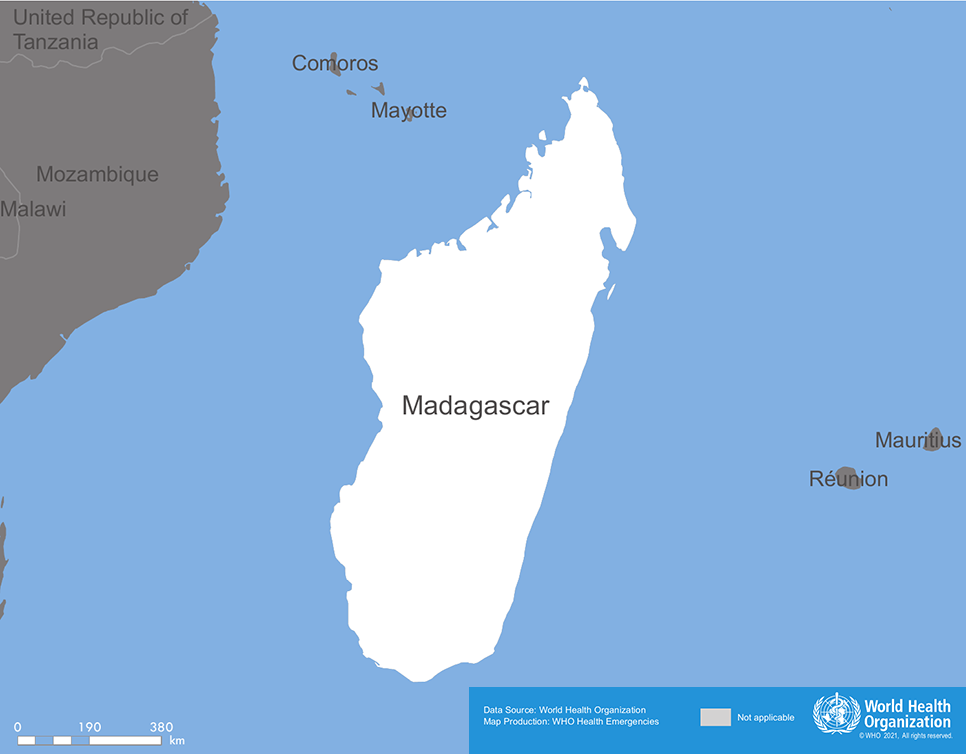
Map disclaimer. Data source: WHO. Map production: WHO/Health Emergencies Programme. @ WHO 2021. All rights reserved.
Formal Health Cluster System (IASC declared), dashboard data as of February 2026:
 | 382,000 people affected |  | US$ 8.3M requested |  | 2022 year activated |
 | 202,000 people targeted |  | funded |  | Co-coordinator |
Health Cluster coordination
Gilbert Kayoko
Health Cluster Coordinator
tshifuakag@who.int
Health Cluster team
National team: 1
Coordinator: 1 PT
Information management officer: 0
Public health officer: 0
Communications officer: 0
Subnational hubs:2
Health Cluster partners
Partners: 27
International NGOs: 14
National NGOs: 2
UN agencies: 4
National authority: 1
Donors: 4
Observers:2
