Mozambique
Humanitarian needs in Mozambique rose sharply in 2025, driven by escalating conflict in Cabo Delgado, repeated displacement and the cumulative impact of cyclones and drought. Violence by non-State armed groups intensified, triggering over 230,000 new displacements and widespread protection risks, particularly for women, girls and children. Access to essential services remains severely constrained, with many health facilities still non-functional, limited humanitarian access due to insecurity, and increasing food insecurity and psychosocial distress across affected communities.
In 2026, the Health Cluster will focus on delivering life-saving, equitable and integrated health services in the most affected districts of Cabo Delgado, Nampula and Niassa. The response prioritizes primary health care, including vaccination, maternal and reproductive health, epidemic surveillance and response, and treatment of the leading causes of morbidity and mortality. Particular attention is given to vulnerable groups, including displaced populations, women and children, persons with disabilities, GBV survivors and people living with HIV or TB.
The response also aims to strengthen continuity of care, expand mental health and psychosocial support, and improve emergency preparedness through reinforced supply chains and prepositioned medical kits. Operating in a highly constrained environment marked by insecurity, access limitations and funding gaps, the Health Cluster will continue to adapt its approach to ensure timely, coordinated and effective assistance to populations most in need.
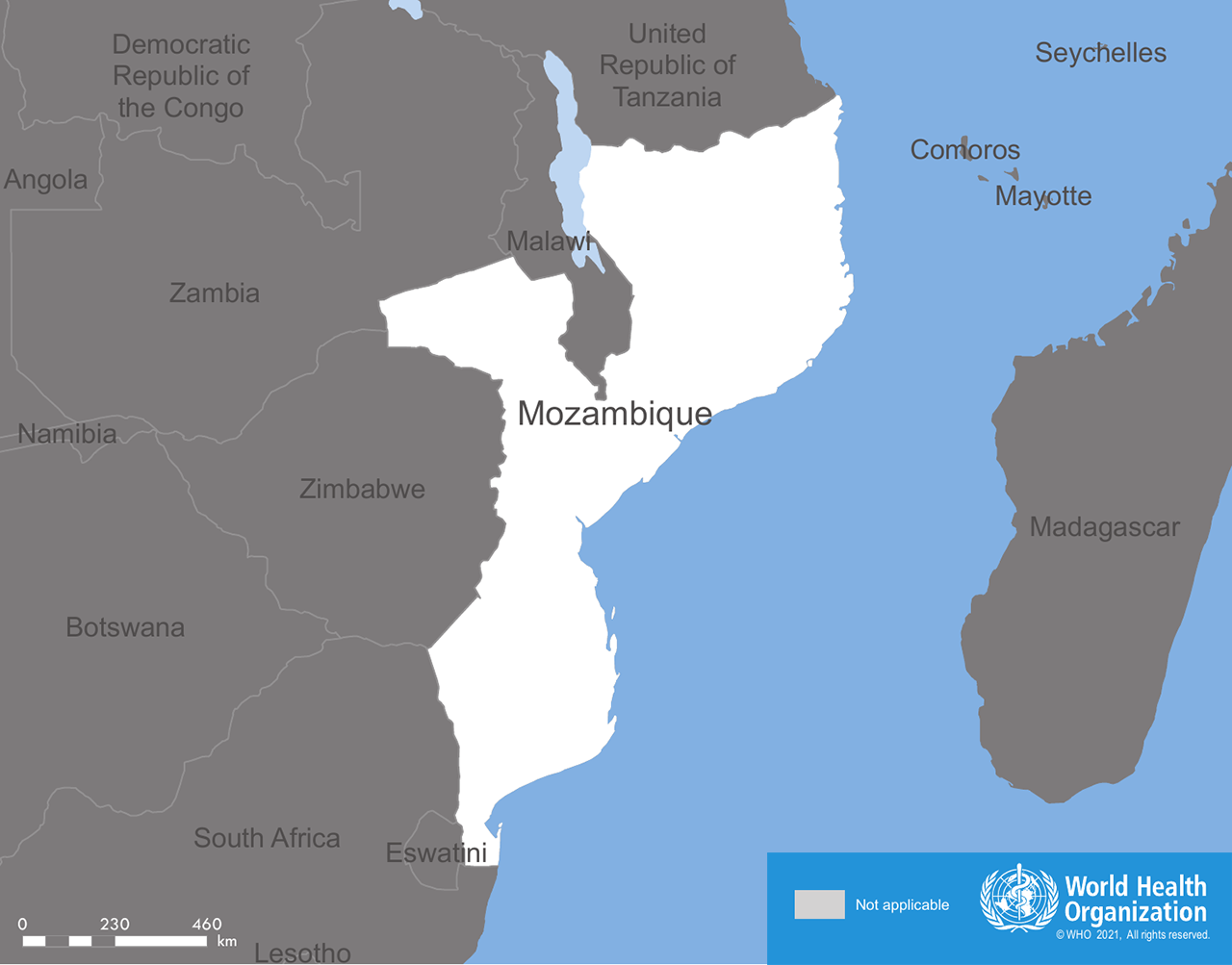
Map disclaimer: Data source: WHO. Map production: WHO/Health Emergencies Programme. @ WHO 2021. All rights reserved.
Formal Health Cluster System (IASC declared) data as of June 2026
 | 489,000People in Need |  | US$37 million requested |  | 2019 year activated |
 | 410,000People Targeted379,000 urgently prioritized |  | 27% funded |  | Co-coordinatorMoH |
Health Cluster coordination
Health Cluster team
National team: 3
Coordinator: 1PT
Information management officer: 1FT 1PT
Public health officer: 0
Communications officer: 0
Subnational hubs: 1
Health Cluster partners
Partners: 32
International NGOs: 18
National NGOs: 5
UN agencies: 4
National authorities: 2
Donors: 2
Observers: 2
Others: 1